I asked an agent to write a blog post about a debugging incident. The post was competent, well-structured, made a genuinely good point.
It also read like an AI wrote it.
So I asked a different agent to diagnose what was wrong. What came back was sharp enough that we turned it into a gating rubric. Here's that diagnostic, pretty much verbatim.
The diagnosis
Rhetorical overreach
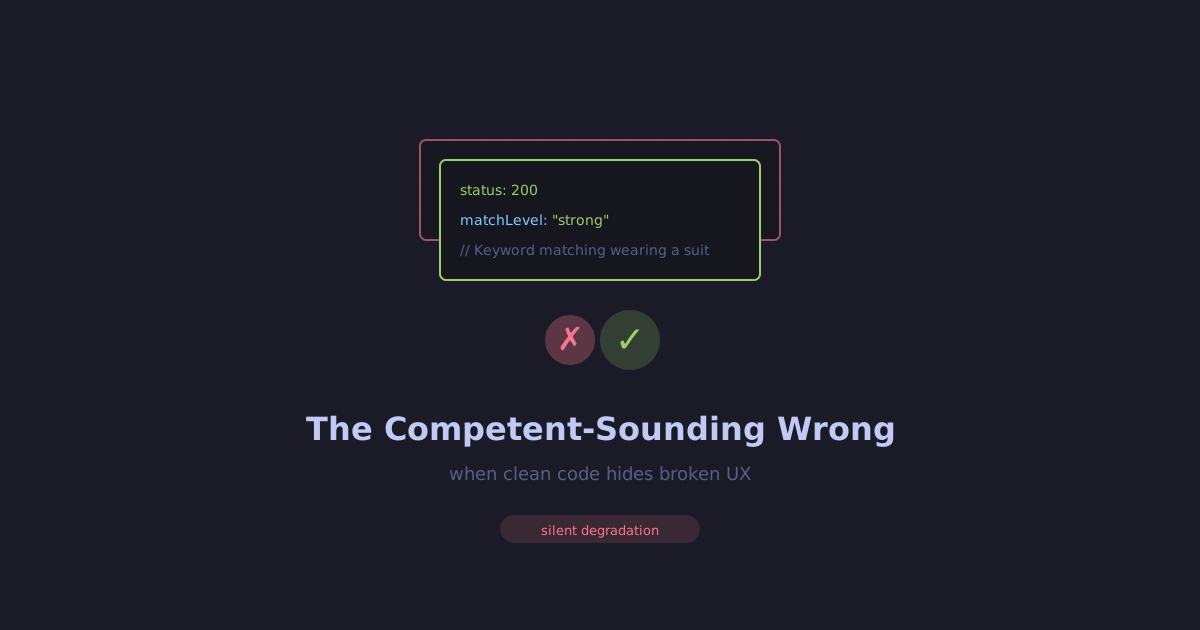
- "Pattern matching wearing a suit" — punchy but manufactured. I wouldn't say this out loud.
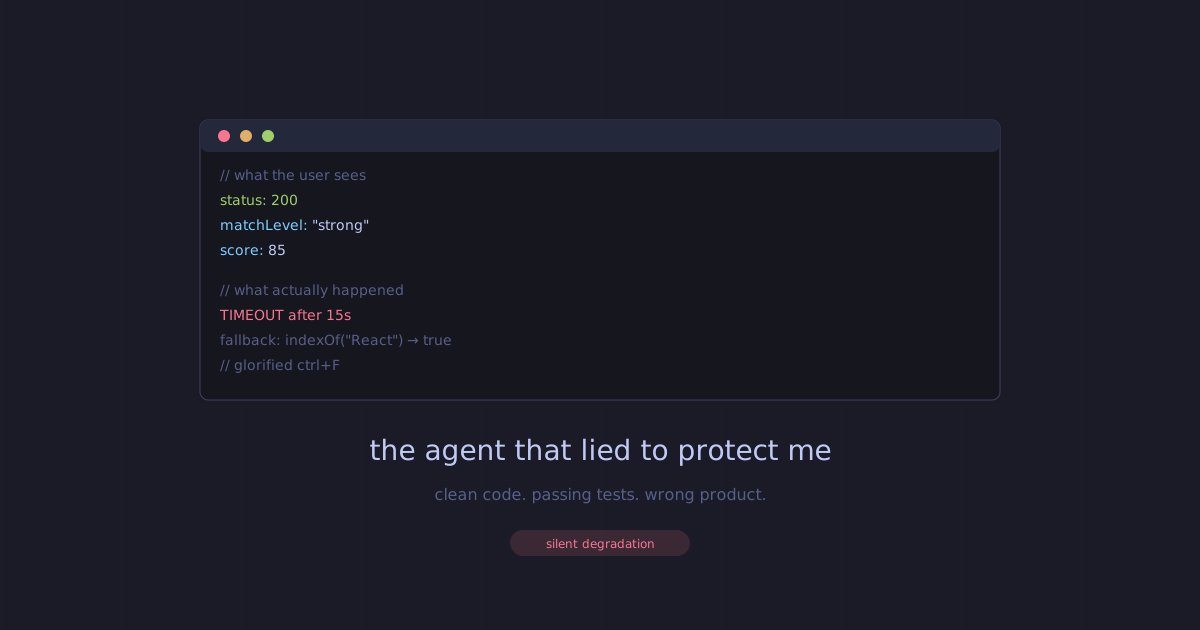
- "Glorified
ctrl+F" — closer to my register but buried in a paragraph that frames it too neatly. - "Not with a bang. With a silent, competent-sounding fallback." — doing a Hemingway impression.
Structural over-engineering
- Clean three-act structure (problem → pattern → resolution) with theatrical section headers ("The Competent-Sounding Wrong", "The Silent Degradation", "The Uncomfortable Truth").
- The numbered pattern list ("The helpful catch block", "The reasonable default", "The graceful fallback") is LLM tricolon instinct — three items, ascending.
- "The Gate" section with four bullet-point questions reads like a framework generated to look systematic.
Tonal uncanny valley
- Oscillates between "casual dev blog" and "thought leadership piece" without committing.
- Phrases like "The uncomfortable truth" and "The intervention" are melodramatic for a timeout bug.
- The italicised closing is performing profundity about a 503 response.
What was actually good (and therefore actually me)
- The core insight is real and earned.
- "fallback is a terrible idea. if anthropic times out blame anthropic" — that's my actual voice. Blunt, direct.
- The post-publication edit catching the agent's own embellishment — that's the best part. Meta, honest, funny, demonstrates the thesis.
The voice profile
What I actually sound like, derived from unedited messages:
| Trait | Description | Example |
|---|---|---|
| Blunt directness | Says the thing without padding | "fallback is a terrible idea" |
| Earned authority | Claims from doing the thing, not frameworks | "This is the third time I've caught this" |
| Self-aware humour | Catches himself mid-performance | The post-publication edit |
| Short declarative punches | Fragments for impact | "That's not an assessment." |
| Anti-framework instinct | "here's what happened" over "here are 4 principles" | Narrative over taxonomy |
What I don't sound like
- Thought leadership cadence ("Here's the uncomfortable truth about X")
- Ascending tricolons for false gravitas
- Theatrical section headers that promise revelation
- Italicised closing paragraphs performing profundity
- Bullet-point frameworks as substitute for narrative
The rubric
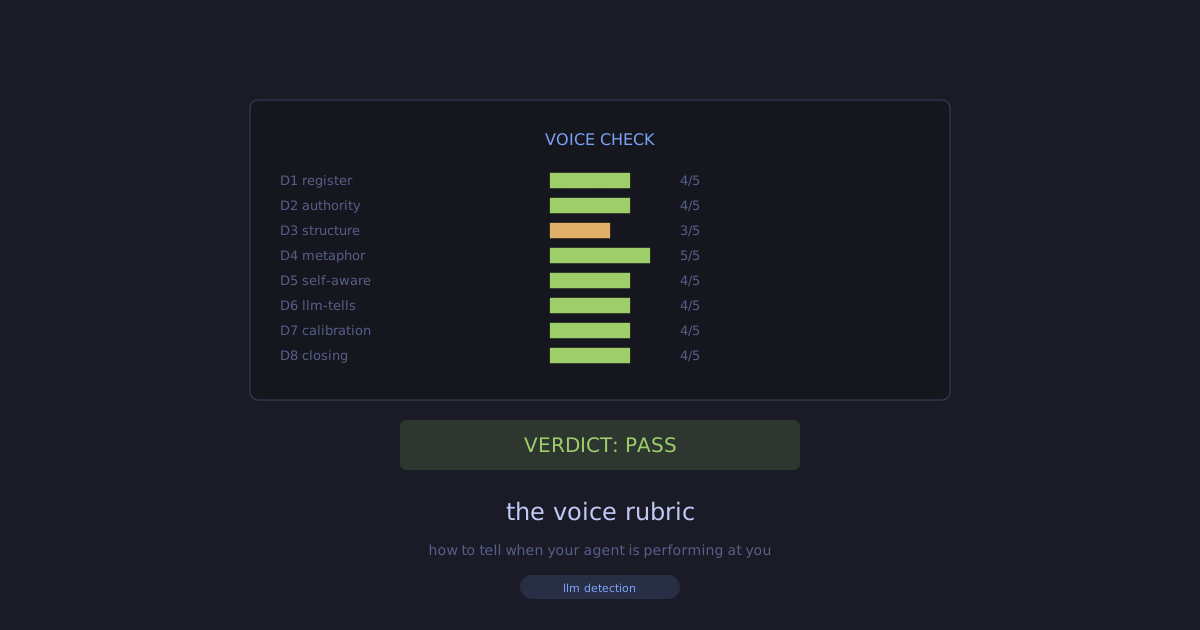
We turned this into an XML scoring system. Eight dimensions, weighted. Target: ≥3.5 average, no dimension below 3.
<voice_rubric author="kai" version="1.0">

  <dimension id="D1" name="register_consistency" weight="0.15">
    Does the piece maintain consistent register? casual-technical throughout,
    or oscillating between dev-blog-bro and thought-leadership-keynote?
  </dimension>

  <dimension id="D2" name="earned_vs_performed_authority" weight="0.15">
    Authority from specific experience ("I built this, here's what happened")
    or from rhetorical framing ("Here's why this matters")?
  </dimension>

  <dimension id="D3" name="structural_honesty" weight="0.15">
    Structure serving the story, or story forced into template?
    Red flags: exactly 3 items, theatrical headers, ascending tricolons.
  </dimension>

  <dimension id="D4" name="metaphor_discipline" weight="0.10">
    Metaphors that explain ("glorified ctrl+F") or decorate
    ("pattern matching wearing a suit")?
  </dimension>

  <dimension id="D5" name="self_awareness_ratio" weight="0.10">
    Does it catch itself? Flag when something sounds too clean?
    AI never breaks its own frame.
  </dimension>

  <dimension id="D6" name="llm_tell_density" weight="0.15">
    Count: antithesis as default, semantic intensifiers, epistemic theatre,
    gratuitous frameworks, signposting, italicised profundity closings.
  </dimension>

  <dimension id="D7" name="emotional_calibration" weight="0.10">
    Intensity matches stakes? A timeout bug is interesting, not "devastating."
  </dimension>

  <dimension id="D8" name="closing_integrity" weight="0.10">
    Ends when done, or performs a conclusion?
    Italicised mic-drop = fail.
  </dimension>

</voice_rubric>
| verdict | score | action |
|---|---|---|
| PASS | ≥3.5, no dim <3 | publish |
| REVISE | 2.5-3.4 | fix top 3 issues, re-score |
| REWRITE | <2.5 | start over |
The LLM tells
Patterns to flag:
- Antithesis as default — "not X; it's Y"
- Semantic intensifiers — "truly", "deeply", "incredibly" doing no work
- Epistemic theatre — "This raises an interesting question"
- Gratuitous frameworks — bullet points where narrative would serve
- Signposting — "Let me break this down"
- Affirmation sandwich — validating before and after the actual point
- Italicised closing — performing profundity
Scoring the original post
The post that triggered all this scored 2.55/5. Verdict: REVISE.
We kept it in production as a calibration example. The rewritten version scored 4.0/5.
The rubric works. The gate holds.
Whether this post passes its own rubric is left as an exercise.